Anxiety, panic attacks, and a persistent sense of danger
 Margarita Marchukneurologist · psychiatrist · psychotherapist
CBT · Schema Therapy · ACT
Psychotherapy with a clear focus and purpose
Structured, evidence-based psychotherapy for people who want not only to talk, but also to recognise patterns, learn new ways of responding, and evaluate change.
CONSULTATION FEE
UAH 2,200BookPsychotherapy consultation
Fee for one online consultation.
WHEN TO SEEK HELP
Concerns we can begin working with
Depression, exhaustion, and loss of motivation
Intrusive thoughts, checking, and avoidance
Adjustment difficulties, bereavement, or traumatic experiences
Recurring relationship patterns and excessive self-criticism
Living with chronic illness and fear of deterioration
HOW THE PROCESS WORKS
From psychiatric assessment to a treatment protocol
Appointment 1 · psychiatric assessment
Before the appointment, you complete a standardised screening questionnaire. During the consultation, we review your concerns, symptoms, their onset and course, their impact on daily life, previous treatment, medical history, and relevant risks. The clinical picture is compared with DSM-5-TR criteria.
Appointment 2 · CBT conceptualisation
We complete the psychotherapeutic assessment and develop an Oxford-style case formulation covering current problems, goals, relevant experiences, triggers, and maintaining factors. We then agree on the likely duration and frequency of therapy.
Treatment using a unified protocol
After the first appointment, treatment begins using an evidence-based protocol for the identified condition. We work with thoughts, emotions, bodily responses, and behaviour, using skills training, exposure, behavioural experiments, and other techniques appropriate to the person's needs.
Schema therapy and ACT · when indicated
When a problem is maintained by entrenched life patterns, self-criticism, avoidance, or loss of contact with personal values, schema therapy and Acceptance and Commitment Therapy tools may be integrated into CBT.
Practice between sessions
Between-session tasks are selected individually and do not need to be completed ‘perfectly’. Their purpose is to bring new skills into daily life and test therapeutic hypotheses in practice.
Progress, completion, and relapse prevention
We periodically review goals, wellbeing, daily functioning, and screening measures. At the end, we document the skills that work, early warning signs, and a maintenance plan; booster sessions can be arranged if needed.
PROOF OF QUALIFICATIONS
Documents confirming professional training
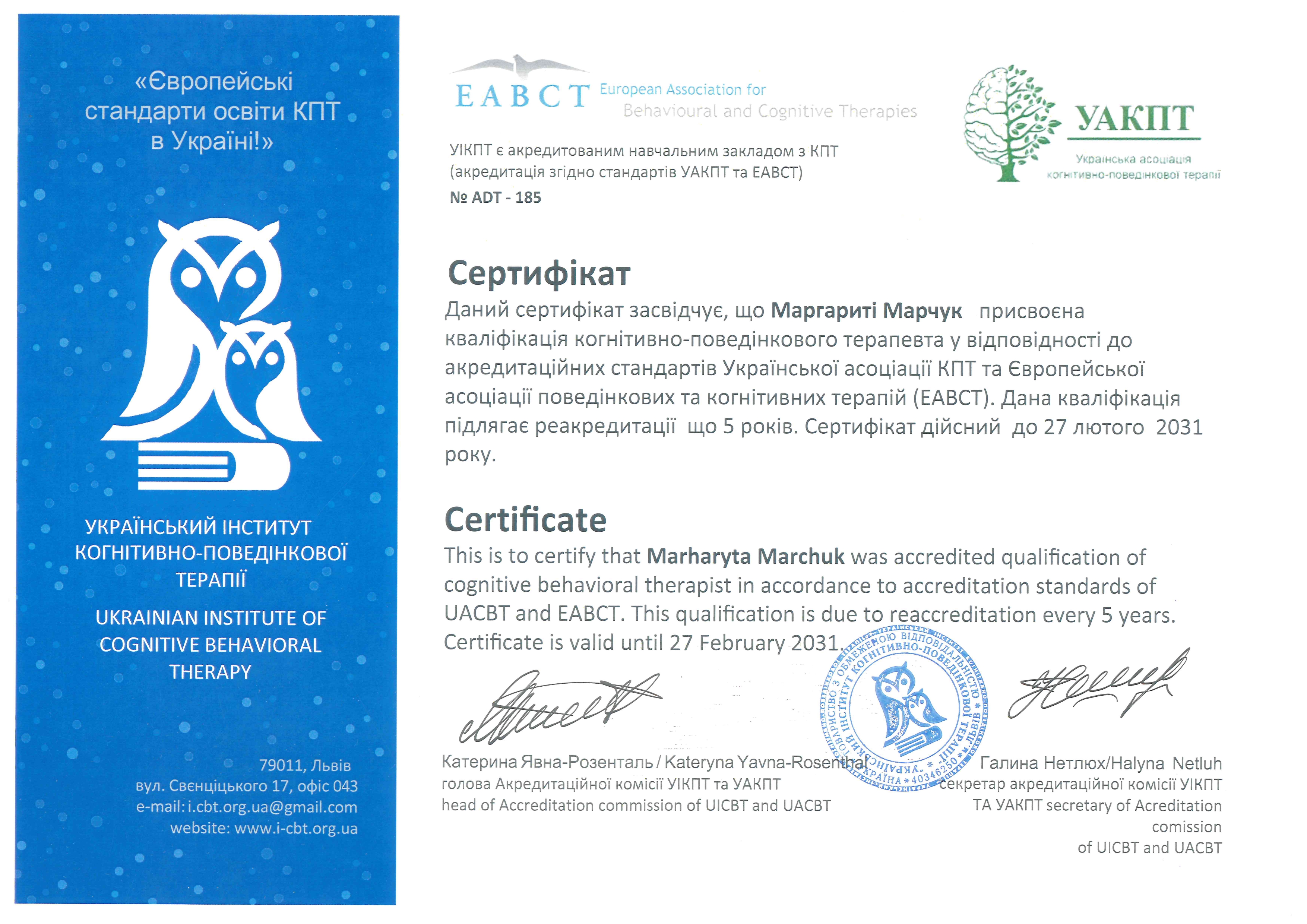
4 yearscomplete CBT training programme
ADT-185UACBT / EABCT accreditation
2031accreditation validity
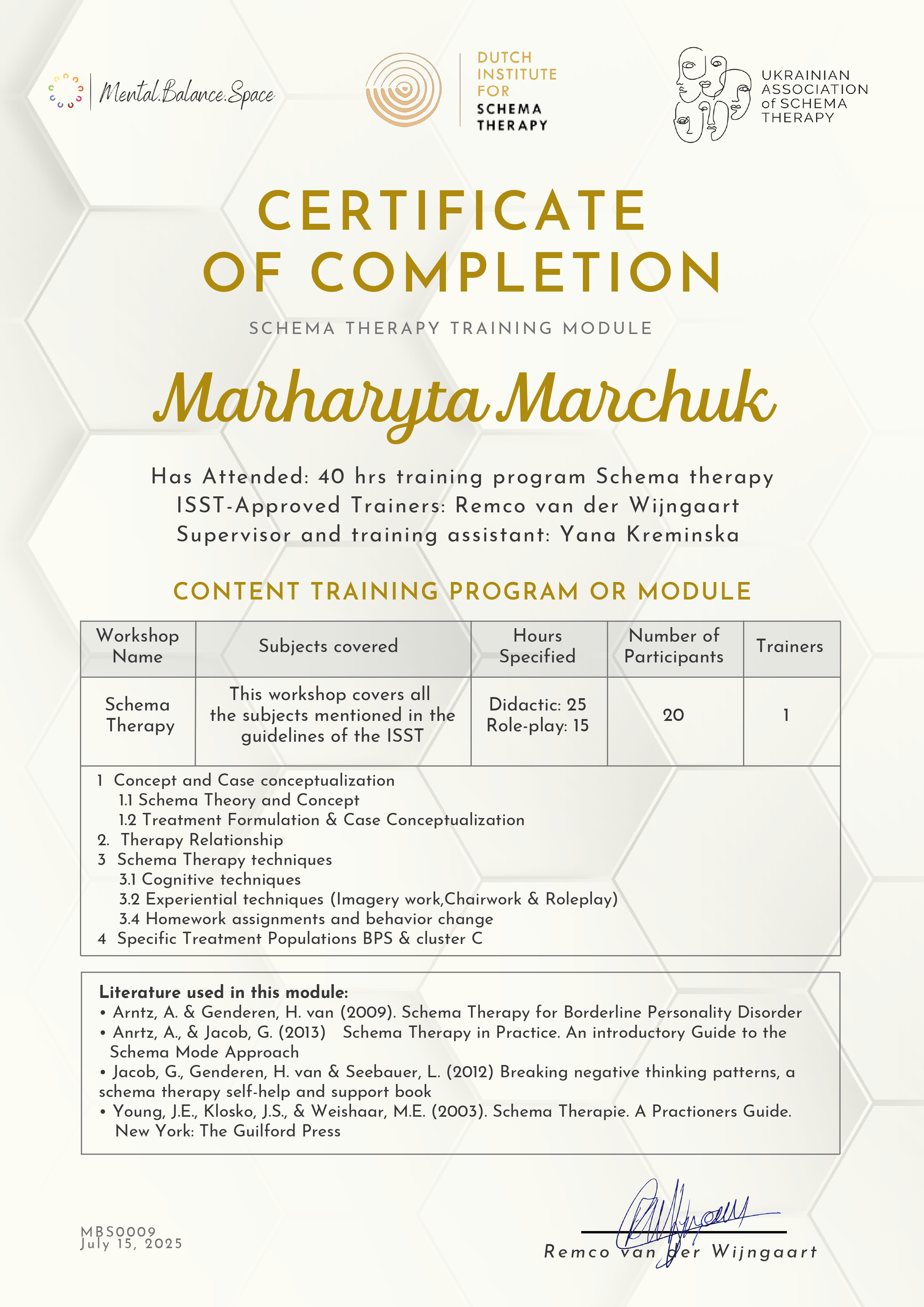
40 hoursschema therapy training
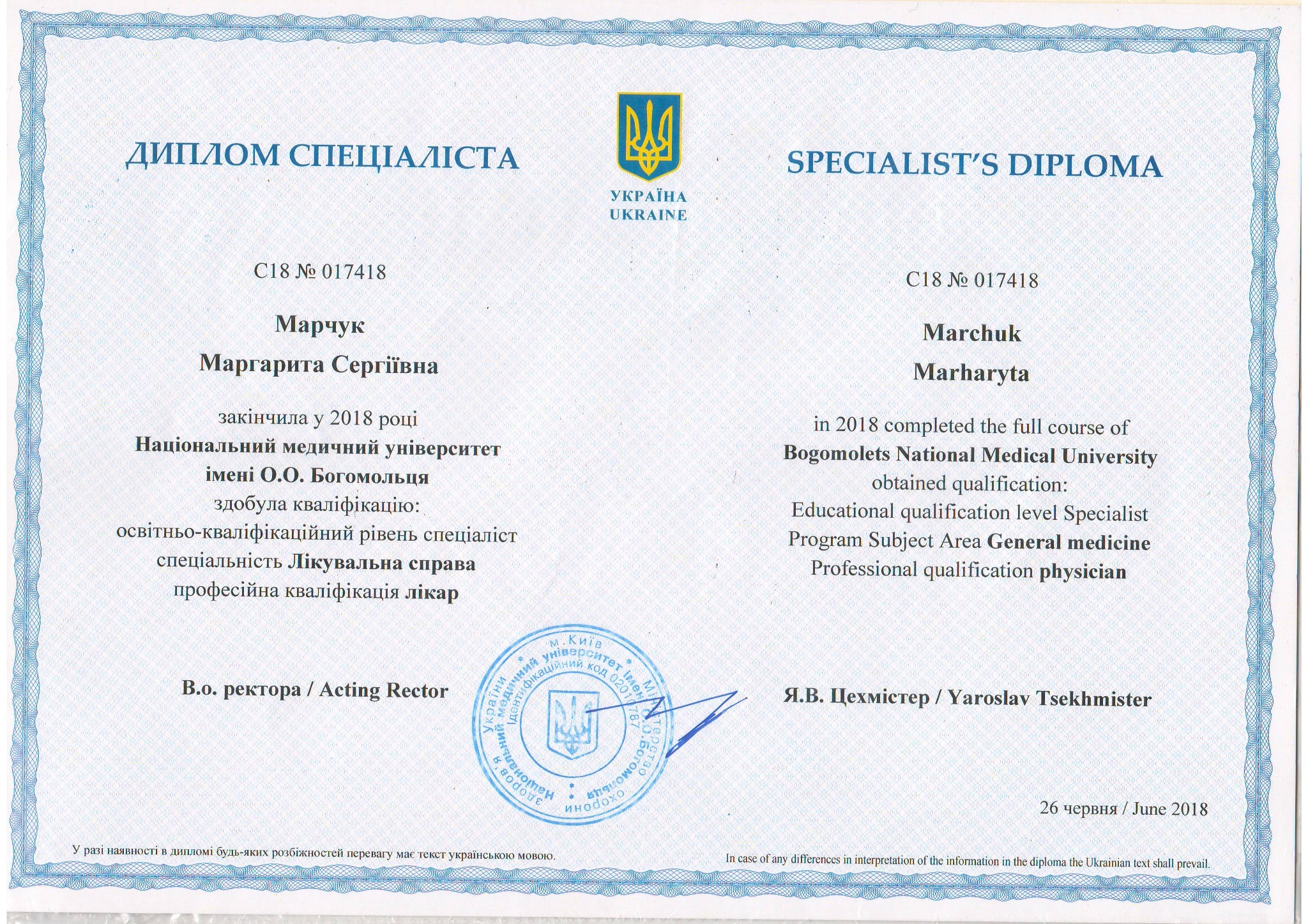
SPECIALIST BACKGROUND
Training and experience in this field
Education and qualifications
CBT+ foundation course
This course at the Ukrainian Institute of Cognitive Behavioural Therapy marked the beginning of structured CBT training in core principles, session structure, and therapeutic techniques.
Complete four-year CBT programme
Ukrainian Institute of Cognitive Behavioural Therapy; the programme meets UACBT and EABCT standards.
UACBT / EABCT accreditation
Accredited cognitive behavioural psychotherapist, certificate ADT-185, valid until 27 February 2031. Accreditation confirms both completed training and assessed supervised clinical practice.
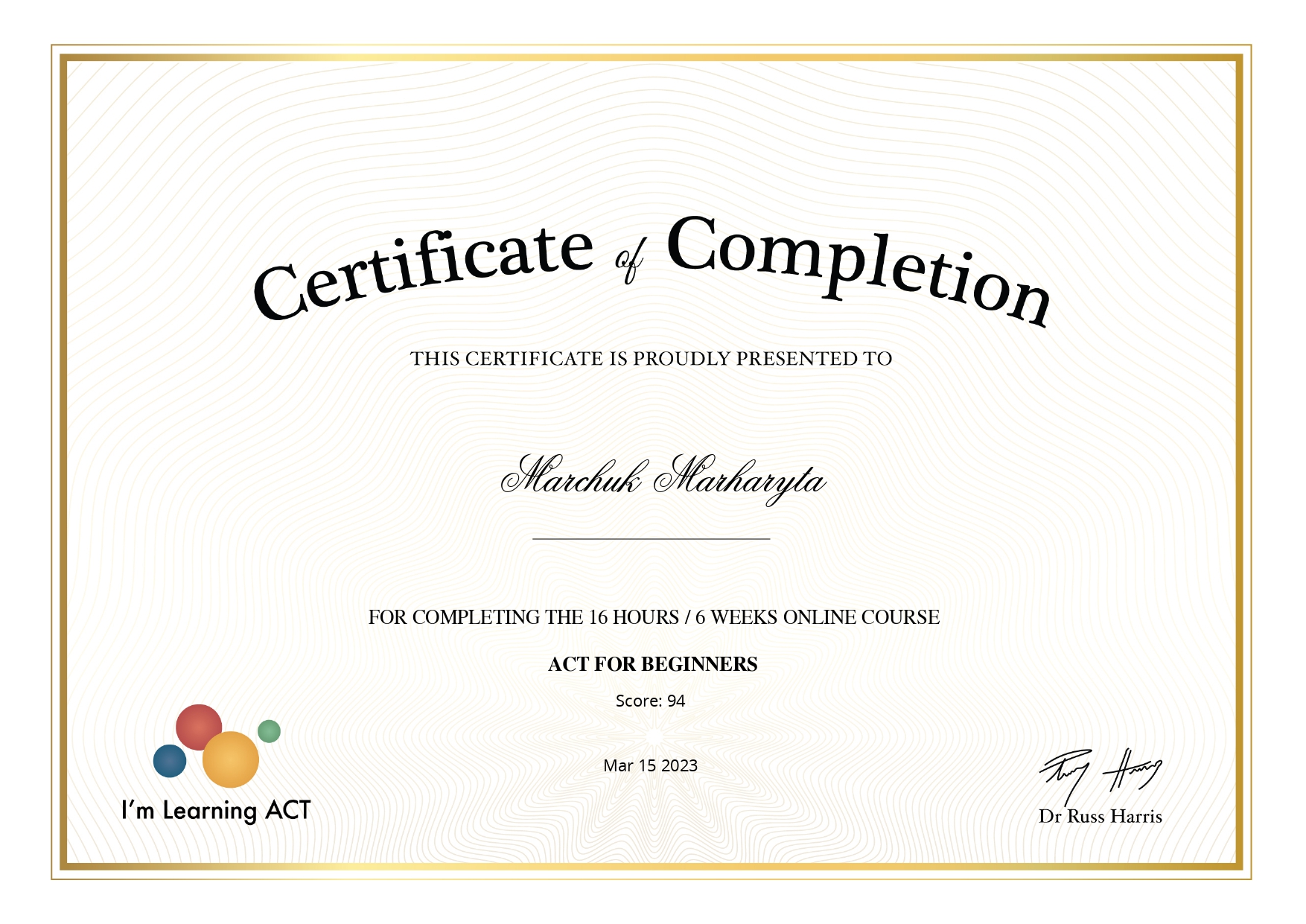
Acceptance and Commitment Therapy
ACT for Beginners: 16 hours of training over six weeks.
Schema therapy
A 40-hour module at the Dutch Institute for Schema Therapy with ISST trainer Remco van der Wijngaart.
Where the experience was built
Psychotherapy consultations at 4Help
CBT practice for anxiety, depressive, and neurotic disorders.
Placement at the Kolo Simyi Centre
Practical psychotherapy training from 2 January to 10 September 2024.
Private practice
Structured psychotherapy for adults: anxiety, depressive conditions, OCD, adjustment difficulties, and living with chronic illness.
Medical training
Specialist qualifications in neurology and psychiatry help identify possible medical causes of symptoms and recognise the limits of psychotherapy.
CBT ACCREDITATION
What was assessed in addition to completing the training programme
ADT-185
UACBT / EABCT accreditation confirms completed theoretical training, clinical practice, supervision, and a final competency assessment. The certificate is valid until 27 February 2031.
- 10 clinical casesOngoing and completed therapy cases managed under supervision.
- 3 audio excerpts from therapy sessionsShort recordings of client sessions were reviewed by a supervisor to assess the therapeutic work.
- 2 complete session transcriptsVerbatim session transcripts were used to assess structure, clinical reasoning, and CBT techniques.
- 2 detailed case reportsEach account systematically analyses the case formulation, course, and content of every session.
- Graduation thesis‘The role of cognitive behavioural therapy in supporting people with myasthenia gravis.’
- UACBT membershipMembership in the Ukrainian Association for Cognitive and Behavioural Therapies entails adherence to professional and ethical standards.
- Standardised assessmentTraining, supervision, and clinical materials were assessed under UACBT / EABCT programme requirements.
PUBLIC CREDENTIALS
Publications, presentations, and professional facts
05—06.06.2024 · SiMed 2024/1
Cognitive behavioural psychotherapy: an accessible treatment approach without medication adverse effects
Educational presentation in the Medicine 360° programme.
23.01.2024 · masterclass
Cognitive behavioural therapy techniques for doctors
A practical presentation for doctors from different specialties.
2024 · Kolo Simyi Centre
Clinical placement
A separate period of practical training after the multi-year CBT programme.
Methods
CBT as the foundation, with schema therapy and ACT when helpful
The therapeutic method is selected according to the concern, clinical formulation, and treatment goals.
PSYCHIATRY · PSYCHOTHERAPY
Open @m.margo_psy ↗Professional content on Instagram
Information on mental health, psychiatric assessment, CBT, schema therapy, and practical tools for patients.
CLEAR ANSWERS
Frequently asked questions about psychotherapy
Clear information about format, confidentiality, payment, and work between sessions.How long does psychotherapy take?+
It depends on the reason for seeking therapy. A few sessions may be enough for a specific problem. If difficulties have persisted for years or involve recurring life patterns, therapy may take longer.
What do I need for an online consultation?+
For online psychotherapy, you need a quiet, safe, and private place where you can be alone with the therapist without interruptions. This supports both effective work and confidentiality. Please use headphones to reduce background noise and echo and to avoid missing important details. No other person may be present during the session on either side, unless a specific exception has been discussed in advance.
Can I attend without a diagnosis?+
Yes. You do not need to know your diagnosis in advance. It is enough to describe what concerns you and how it affects your life. I will conduct an initial psychiatric consultation and we will determine whether your condition meets the criteria for a specific disorder.
Which platform is used for online consultations?+
Online consultations take place in Google Meet. At the end of each session, we agree on the date and time of the next appointment, and I then send the Google Meet link.
What happens if I schedule an appointment and then cancel it?+
I understand that appointments sometimes need to be cancelled or rescheduled, particularly because of safety concerns and the difficulty of planning ahead. If cancellations or changes become frequent, occur only a few hours before the appointment, or happen on the day itself, we will discuss the situation separately and agree on a workable solution. Prepayment may then be proposed.
Will there be between-session tasks?+
Yes. In CBT, between-session tasks are often an important part of therapy. They may include observations, written records, exercises, behavioural experiments, or practising new skills.
Can psychotherapy and medication be combined?+
Yes. For some conditions, combining psychotherapy with medication may be the most effective approach. The decision is made individually.
Is online psychotherapy suitable?+
Online psychotherapy is suitable for many concerns, including anxiety, depression, OCD, phobias, stress, and relationship difficulties. Acute crises may require in-person or emergency care.
Is the consultation confidential?+
Yes. All information shared during a consultation is confidential, except where there is an immediate threat to life or safety.
Can our sessions be video-recorded?+
Yes, this can be arranged and is often used in therapy. A recording can help you revisit important explanations, skills, techniques, or between-session tasks. Recording is possible only with your consent: you may decline it or use recordings that I provide after the session.
May I share the doctor's contact details with other people?+
Yes, of course. If you feel confident recommending my professional work, you may share my contact details or a link to this website with people who may benefit from psychotherapy or psychiatric care.
Do you work with children?+
I work with adult patients. For a child or adolescent, I recommend choosing another specialist from the register of accredited CBT therapists on the UACBT website.
How can I find out the consultation fee?+
For the current consultation fee, contact me directly, submit an enquiry through the website, or use your preferred contact channel.
How do I pay for a consultation?+
I work as a private doctor. Consultation fees are paid officially to my registered sole-proprietor account. Payment details are provided after the appointment has been agreed.
First step